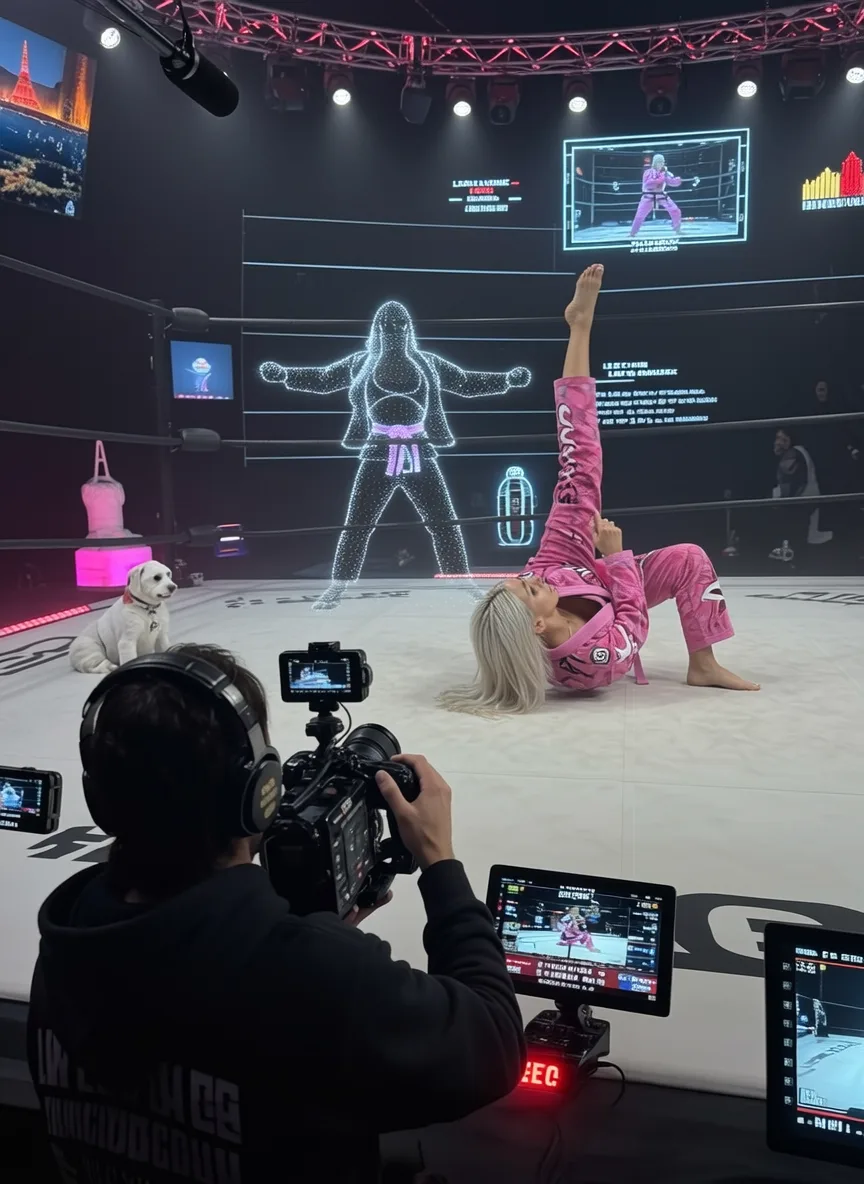
The math that separates scalers from grinders
Here is the difference I see between creators who plateau and creators who compound: the plateau creators treat every post as a separate event. They wake up, decide what to make, make one thing, post it, and start the anxiety loop over the next morning. The compounding creators shoot once and feed the machine for three weeks.
That is content atomization. One capture session, deliberately broken into thirty-plus distinct pieces, each cut to the native shape of the platform it lives on, sequenced so the free stuff pulls strangers toward the paid stuff. It is not "repurposing" in the lazy sense of dumping the same clip on four apps. It is a manufacturing discipline. You are running a small factory, and the raw material is one shoot.
I run my own operation this way, and the single biggest unlock was mental: a captured asset is not a post. It is inventory. A post is one thing you do with inventory. When I stopped conflating the two, my output roughly quadrupled without adding a single extra shoot day.
Shoot for the edit, not for the moment
The atomization starts before the camera is on. If you shoot for a single hero moment, you get a single asset. If you shoot for the edit, you get raw material with optionality baked in.
Concretely, that means: capture the same beat from two framings when you can — a wide and a tight. Roll a few extra seconds of "nothing" before and after the action; those become your loop-ready cutaways and your B-roll. Grab stills inside the video session, not as a separate task — a burst of photos while you are already lit and styled costs you ninety seconds and yields a week of grid and story fills. Say the one sentence that is the point of the whole piece clearly and in isolation, because that sentence becomes your caption, your on-screen text, your quote card, and your hook.
A shoot planned this way takes maybe 20% longer than a "just make one thing" shoot. It produces 5–10x the postable inventory. That ratio is the entire game.
Cut the hero first, then atomize down
The workflow has one rule: build the biggest thing first, then chop.
The hero piece. One polished long-form asset. A 60–90 second vertical, or a fuller piece if you are feeding YouTube or a newsletter. This is the version you would be proud to pin. Everything else is derived from it.
The verticals. From that hero, pull 3–5 short cuts — a 15-second hook version, a "best moment" isolate, a slower build. Same footage, different in-points and out-points. Each one gets its own on-screen text and its own first frame.
The teasers. 2–3 sub-10-second loops built purely to stop a thumb. No payoff — the payoff is the click to your hero or your funnel.
The stills. 6–10 photos pulled from the burst or grabbed as frames. Grid posts, story fills, a carousel, a quote-card background.
The words. The one sentence you captured becomes 3–5 text posts and captions. Quote cards, a thread, a caption that stands on its own.
Run the tally: 1 hero + 4 verticals + 3 teasers + 8 stills + 4 text pieces = 20 assets from one session before you have added a single reaction, remix, or "here's the behind-the-scenes." Push the stills and text a little and thirty is not aggressive — it is the floor.
The ratio I actually plan against
I do not think in "posts." I think in a weekly ratio, roughly 1 hero : 5 verticals : 10 stills/text : 15 story/ephemeral. The ephemeral tier is where the volume lives and where the pressure comes off — those are the raw, unpolished, disappearing pieces that keep you present daily without demanding a new shoot.
One shoot every 7–10 days, atomized against that ratio, keeps every surface fed. If a shoot is strong, it can carry two full weeks. The discipline is refusing to let a good asset be one post — you meter it out.
Sequence it as a funnel, not a spray
Atomization without sequencing is just noise on more platforms. The pieces have to point somewhere.
The structure I use: discovery platform → owned funnel. The verticals and teasers live where strangers scroll — short-form video, the explore-driven feeds. Their only job is reach and a single next step. That next step is your bio, your link, your DMs — the owned layer you actually control. The hero piece and the stills live closer to that owned layer, rewarding the people who took the step. The text and quote pieces do the connective work in between, giving your existing audience reasons to stay warm between shoots.
So a single moment on set becomes: a teaser that gets 40,000 strangers, a vertical that converts 3% of them to a profile visit, a bio that routes them one click deeper, and a hero piece plus DM lane that turns the curious into the committed. Same footage. Four jobs. That is a funnel, not a feed.
Why this is an operating discipline, not a hack
The reason I call atomization a discipline and not a tactic: it changes what you optimize. When every post is a fresh idea, you optimize for inspiration, and inspiration does not scale. When your unit of work is the shoot and posts are just outputs, you optimize for systems — capture quality, edit throughput, sequencing. Those scale.
The grinder posts thirty times and shoots thirty times. The scaler posts thirty times and shoots once. Same output, a fraction of the input, and — because the pieces are sequenced instead of scattered — a funnel instead of a firehose. Build the factory once. Then just keep feeding it.
FAQ
How many posts should I realistically get from one shoot?
Aim for 20–30 distinct assets from a single well-planned session. The breakdown is roughly one hero piece, 4–5 verticals, 2–3 teaser loops, 8–10 stills, and 4–5 text or quote pieces. If you cannot hit 20, the problem is usually the shoot plan, not the edit — you captured one moment instead of shooting for the edit with multiple framings and a still burst.
Does reposting the same footage everywhere hurt my reach?
Only if you post it identically. Atomization is the opposite of cross-posting the same clip — each derivative gets a native in-point, its own on-screen text, and a different first frame so the algorithm and the viewer read it as fresh. The underlying footage can repeat; the packaging cannot.
How often should I actually shoot?
One deliberate session every 7–10 days is enough to keep every surface fed if you atomize properly. A strong shoot carries two weeks. The failure mode is shooting constantly to fill a calendar you could fill from inventory — that is grinding, and it is exactly what atomization is designed to end.
Where should all these pieces point?
Toward your owned funnel. Verticals and teasers do reach on discovery platforms; their single job is to move a stranger one step closer — to your bio, link, or DMs. The hero piece and stills reward the people who took that step. Never let a discovery-platform post be a dead end; every atomized piece should have a next step baked in.